Dye-sensitized solar cell (DSSC) which is the third-generation solar cell that utilized dye molecules to absorb light and convert it to electrical energy has a promising efficiency with the ongoing research worldwide. Many implementations have been made through various substitution for materials, optimization on electrodes and assembly of the devices. Since the conventional solid-state DSSC is very rigid to the shape, therefore, the flexible DSSC was introduced. In this study, the flexible photoanode was used to replace the FTO/glass as photoanode electrode. The flexible substrate used is indium tin oxide/polyethylene terephthalate (ITO/PET). However due to its character as a polymer, the limit sintering temperature is 150 °C and it could not withstand the high temperature of 450 °C, which is needed for the titanium dioxide (TiO2) photoanode deposited on electrode to remove the binder used inside the paste, ensuring the particles between the TiO2 is porous and enhance the mobility of electrons generated by N719 dye. Therefore, the free binder TiO2 paste was introduced and deposited using doctor blade method, sintered at 120 °C for 24 hours. However, the efficiency obtained is only 0.07% which is due to weak adhesion to the substrate. Another approach of using flexible titanium (Ti) foil substrate is proposed to overcome the intolerance of high temperature of ITO/PET as it could stand temperature of more than 450 °C, lightweight and flexible at some degree which is suitable to substitute the ITO/PET. Since it is opaque, the back-illumination technique has been introduced. To improvise the performance, the optimization of the device was done by optimizing the thickness of TiO2 the photoanode at 15.09 µm and N719 dye loading time for 45 hours. The thickness of TiO2 leads to better adsorption of dye N719 to collect photons and transfer the electrons while the thickness of Pt counter electrode optimized at volume of µL with thickness of 10 nm after sintering, enhanced the absorption of lights. The result shows that Ti foil treated with H2O2 achieved efficiency of 1.0% exceeded the back illuminated FTO/glass due to the strong particles interconnect between Ti foil surface and TiO2 nanoparticles network that enhanced the electron transfer and reduced the electron recombination in the device.
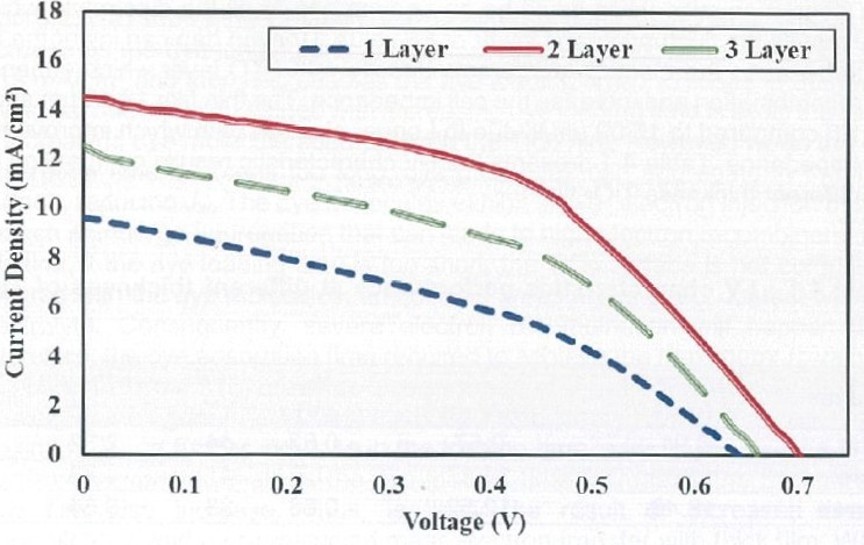
Figure 1: I-V characteristic performance at different thickness TiO2 film.
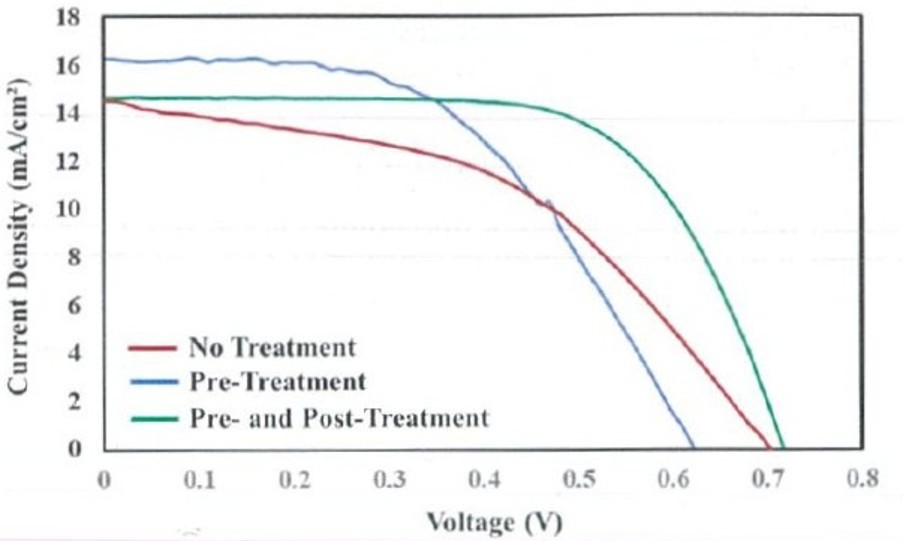
Figure 2: I-V characteristic performance for untreated, pre-treated and, pre-and post-treated with TiCl4.
Table 1: I-V characteristics performance of TiCl4 treatment.

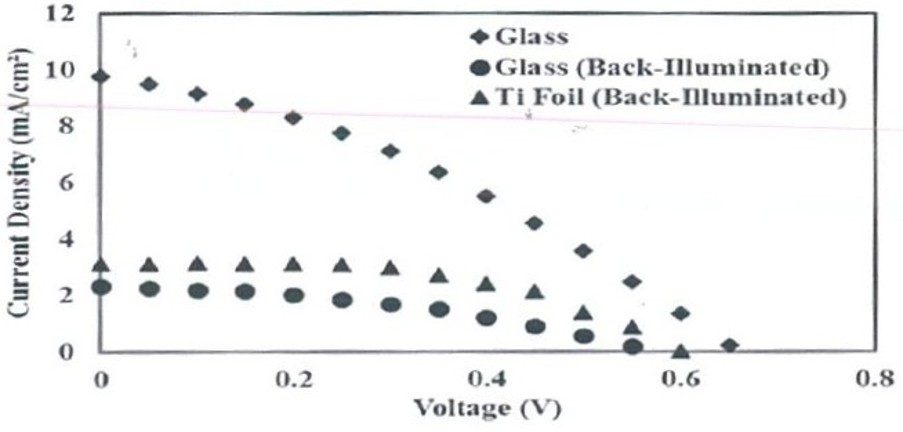
Figure 3: Physical appearance of (a) Ti foil before polishing, (b) after polishing, (c) after the treatment with H2O2 and (d) after sintered at 450 °C.
*Abstract of the thesis (MSc) by Suraya binti Shaban.
For further information please contact:
Suhaidi Shafie, PhD
suhaidi@upm.edu.my
Tarikh Input: 23/06/2026 | Kemaskini: 23/06/2026 | roslina_ar
PERKONGSIAN MEDIA