






























Universiti Putra Malaysia (UPM) gives priority to the students’ essentials and their well-being especially among current students who are studying in UPM. Hence, UPM ensures that it provides an array of technology equipment and facilities in order to guarantee that the students’ welfare is well taken care of.
In line with that, various programs and non-academic related activities are carried out so as to provide a conducive environment where students can appreciate quality leisure times and subsequently creating balance between academic achievement, soft skills and sustainable living.
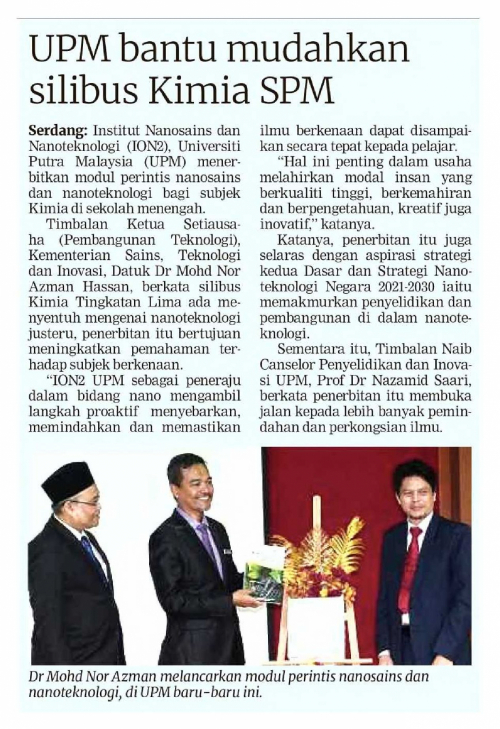
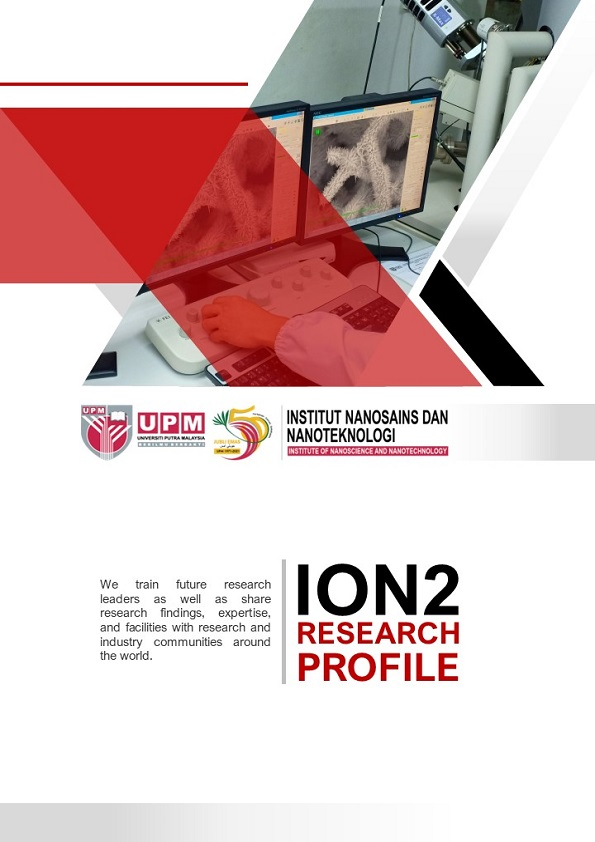
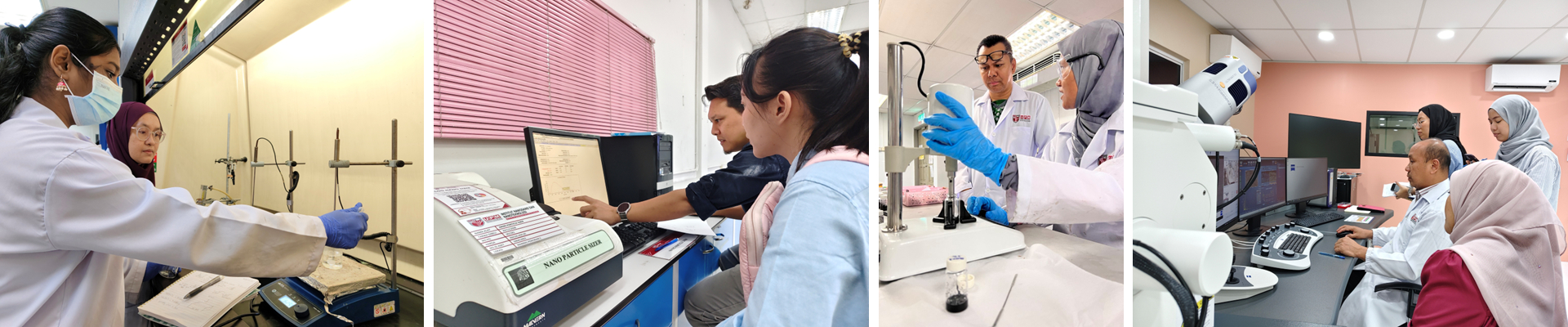
The Institute of Nanoscience and Nanotechnology (ION2), formerly known as the Institute of Advanced Technology is one of the research institutes in UPM established in November 1999. ION2 develops research laboratories in the field of nanotechnology and advanced materials focusing on the niche areas of nano-scale green synthesis and applications. We train future research leaders as well as share research findings, expertise, and facilities with research and industry communities around the world.
Please click the link below for more information on our main activities:
Turning Peanut Shell Waste into High-Sensitivity Sensors: UPM Researchers Publish Breakthrough Study in Q1 Journal
The study, titled “Harnessing Arachis hypogaea shells waste into carbon quantum dots for potential surface plasmon resonance detection of 2-nitrophenol,” explores the conversion of discarded peanut shells into nanoscale carbon quantum dots using a hydrothermal synthesis method. The research brings together the concepts of waste valorisation, green nanotechnology and advanced sensing, turning an abundant agricultural waste material into a potentially valuable nanomaterial for environmental monitoring.
ION2 Nurtures STEM Talent Through NanoDidik @Perak
ION2 successfully organised NanoDidik @ Perak 2026, a two-day programme held at Dewan Sri Bitara, Sekolah Menengah Sains Tapah (SESTA), Perak. This initiative is part of a continuous effort to nurture interest and talent in STEM fields, particularly nanoscience and nanotechnology, among secondary school students and teachers.