Chapter 9 - Nanocellulose-based composites in propellant formulations
This chapter highlight the intersection of nanocellulose science and energetic material engineering represents a paradigm shift in how we approach high-performance materials. At its core, this field leverages the exceptional mechanical properties of cellulose at the nano-scale specifically its high crystallinity and surface area to revolutionize the synthesis of sustainable composites. By adopting propellant formulation techniques like rapid high-shear mixing and controlled thermal curing, researchers can overcome the traditional hurdle of nanoparticle agglomeration. These methods ensure a homogeneous distribution of fibers within a matrix, which significantly strengthens interfacial bonding and allows for the precise engineering of the material's internal microstructure and porosity.
A significant portion of this advancement centers on the chemical modification of nanocellulose through nitration. When nanocellulose is converted into nitrocellulose, it ceases to be just a passive filler and instead becomes a multifunctional component. In the context of single- and double-base propellants, this nitrated nanocellulose serves as both a high-strength structural reinforcement and an energetic binder. This dual role is particularly valuable in aerospace and defense applications, where reducing "dead weight" is critical. The high surface-to-volume ratio of nanostructures like cellulose nanocrystals (CNC) and nanofibers (CNF) allows for more efficient nitration and more predictable energy release compared to traditional micro-scale cellulose.
The versatility of these composites is further enhanced through surface functionalization and hybridization with advanced nanomaterials. Integrating graphene or carbon nanotubes can impart electrical conductivity and improved thermal dissipation, while the addition of metal oxides acts as a catalyst to fine-tune the burn rate and heat resistance. These modifications allow for "tunable" properties, where the material can be customized for specific needs, such as high-velocity impact resistance or optimized combustion efficiency. Because these scaffolds are bio-based, they offer a much-needed reduction in the environmental toxicity and carbon footprint typically associated with conventional synthetic propellant binders.
Despite the clear performance potential, transitioning these materials from the laboratory to industrial application involves navigating complex challenges. Managing the inherent reactivity of nitrated nanostructures requires stringent safety protocols and precise environmental controls during synthesis to prevent accidental ignition. Furthermore, achieving industrial scalability while maintaining the delicate nanostructure and ensuring compatibility with other active agents remains a primary focus of current research. Ultimately, nanocellulose-based propellant composites stand as a promising frontier, offering a blueprint for the next generation of eco-friendly, lightweight, and multifunctional materials in high-stakes engineering sectors.
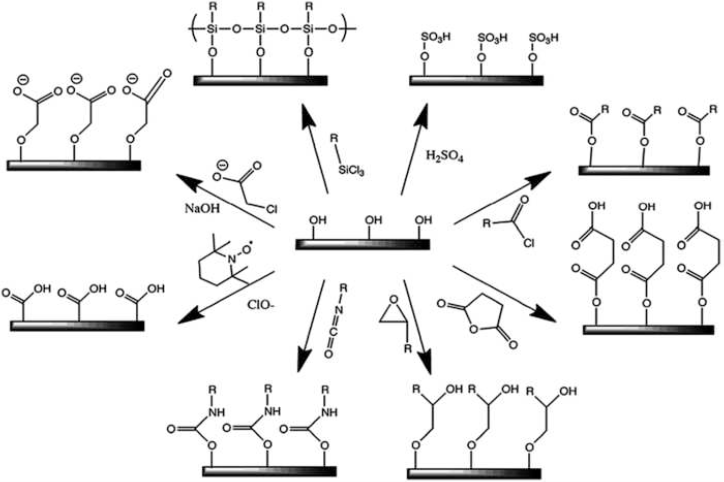
Figure 1: Surface functionalization on nanocellulose.
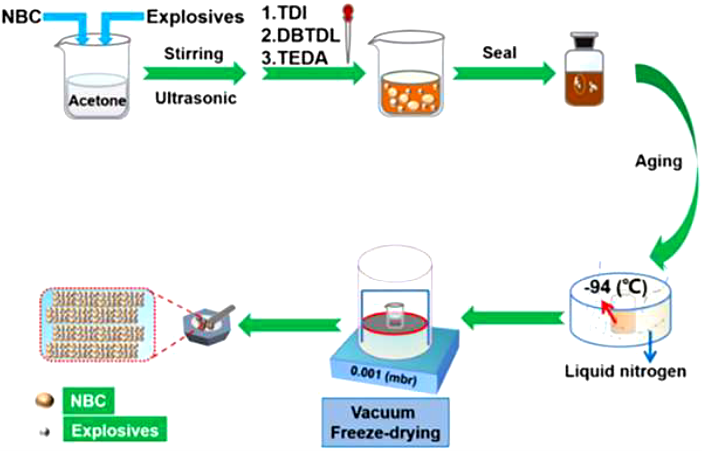
Figure 2: Sol–gel supercritical method.
Source:
Farah Nadia Mohammad Padzil*, Sinyee Gan, Ruey Shan Chen, Mohd Hafizuddin Ab Ghani, A. Atiqah, N.A. Abu Hassan, Ching Hao Lee, Lih Jiun Yu
(https://www.sciencedirect.com/science/chapter/edited-volume/abs/pii/B9780443414695000074)
Tarikh Input: 28/04/2026 | Kemaskini: 28/04/2026 | roslina_ar
PERKONGSIAN MEDIA