Introduction
Smart fiber represents a transformative innovation in intelligent materials, garnering significant academic and industrial interest within the Electric Vehicle (EV) sector. This technology pertains to multifunctional fibers that integrate electrical, mechanical, and sensing properties into a singular material architecture. Unlike conventional materials—which serve primarily as mechanical reinforcements—smart fibers function as sensors, electrical conductors, and energy storage media. Consequently, their integration into EVs marks a pivotal stride toward more intelligent, lightweight, and streamlined mobility.
Material Composition and Synthesis
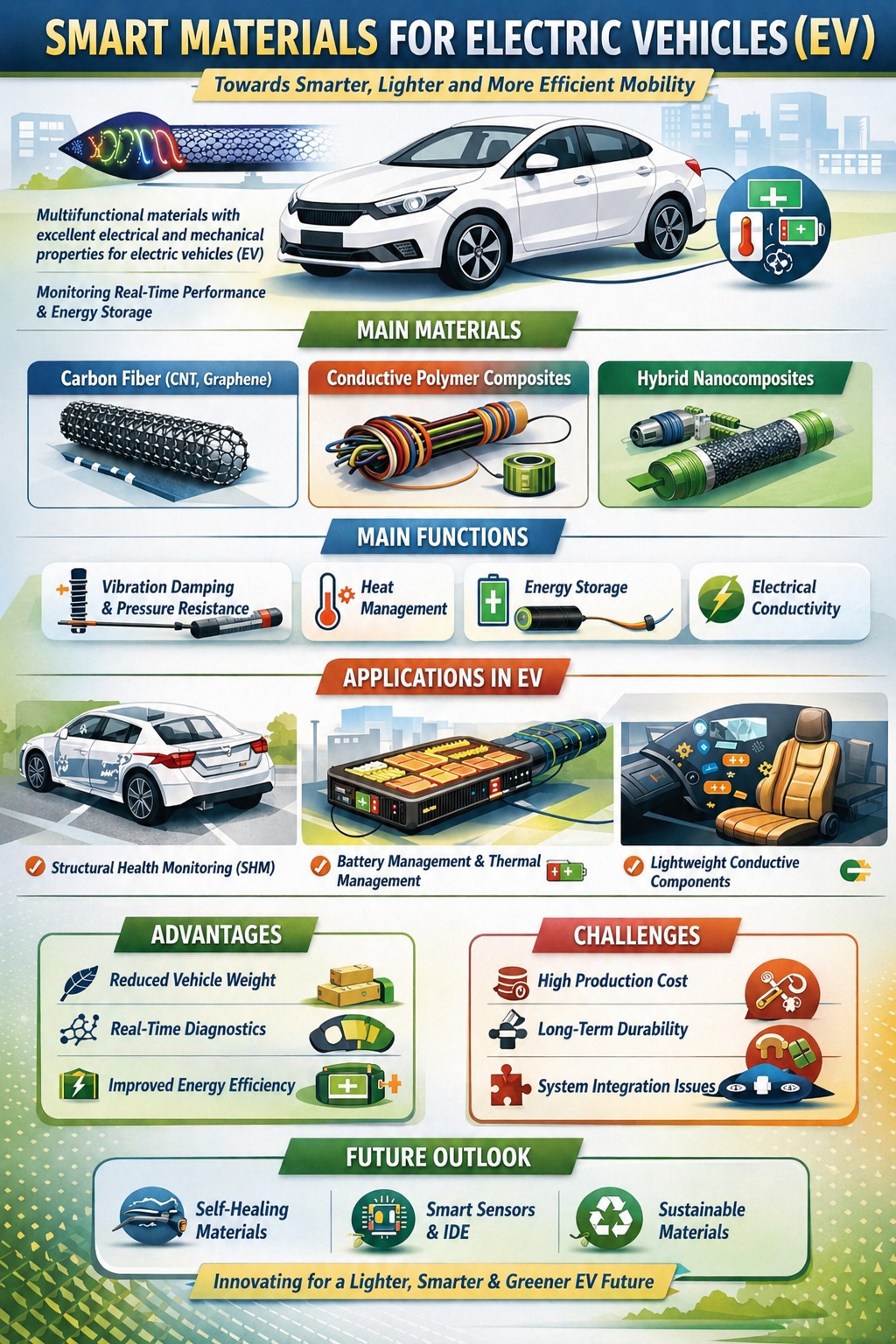
In terms of composition, smart fibers are typically synthesized from carbon-based precursors such as Graphene, Carbon Nanotubes (CNTs), and Graphite, which are renowned for their superior electrical conductivity and mechanical robustness. Furthermore, conductive polymer composites, including Polyaniline and PEDOT:PSS, are utilized for their inherent flexibility and low density. The synergy of these materials within hybrid nanocomposites facilitates the production of high-performance fibers capable of multifunctional operation, tailored for the rigorous demands of complex EV environments.
Core Functionalities
The primary functional roles of smart fibers in EVs encompass sensing, electrical conduction, and energy storage:
- Sensing: Utilizing piezoresistive mechanisms, these fibers detect strain and pressure fluctuations within the vehicle structure. They can also function as thermal sensors to monitor the real-time status of battery packs and motor systems.
- Energy Management: Smart fibers can be engineered as fiber-shaped supercapacitors or micro-batteries, contributing to the concept of distributed energy storage, which optimizes overall systemic efficiency.
Technological Applications in EVs
The applications of smart fiber technology are extensive and critical to vehicle longevity and safety:
1. Structural Health Monitoring (SHM): Embedded within the vehicle chassis, these fibers detect structural anomalies such as fractures or material fatigue in real-time.
2. Thermal and Battery Management: They ensure battery temperatures remain within optimal parameters, significantly mitigating the risk of thermal runaway.
3. Weight Reduction: By serving as conductive networks, smart fibers reduce the reliance on heavy conventional wiring harnesses, enhancing vehicle range and efficiency.
4. Intelligent Interiors: These materials support the development of smart cabin systems capable of monitoring driver physiological states to improve safety and ergonomics.
Challenges and Future Outlook
Despite their myriad advantages, the deployment of smart fibers faces several bottlenecks, including prohibitive production costs, long-term durability concerns, and complexities in system integration. Furthermore, scaling production and establishing standardized protocols remain imperative for commercial viability. However, with ongoing advancements in nanotechnology and materials science, these hurdles are expected to be overcome in the near future.
Conclusion
In summary, smart fibers possess the potential to revolutionize the design and functional paradigm of electric vehicles. By consolidating multiple utilities into a single material substrate, they emerge as a cornerstone technology for enhancing the efficiency, safety, and intelligence of EV systems. Through sustained research and innovation, smart fibers are poised to play a quintessential role in the evolution of next-generation electric mobility.
Prepared by:
Mohd Ali bin Mat Nong
Research Officer, FNDL
Date of Input: 27/04/2026 | Updated: 27/04/2026 | roslina_ar
MEDIA SHARING